
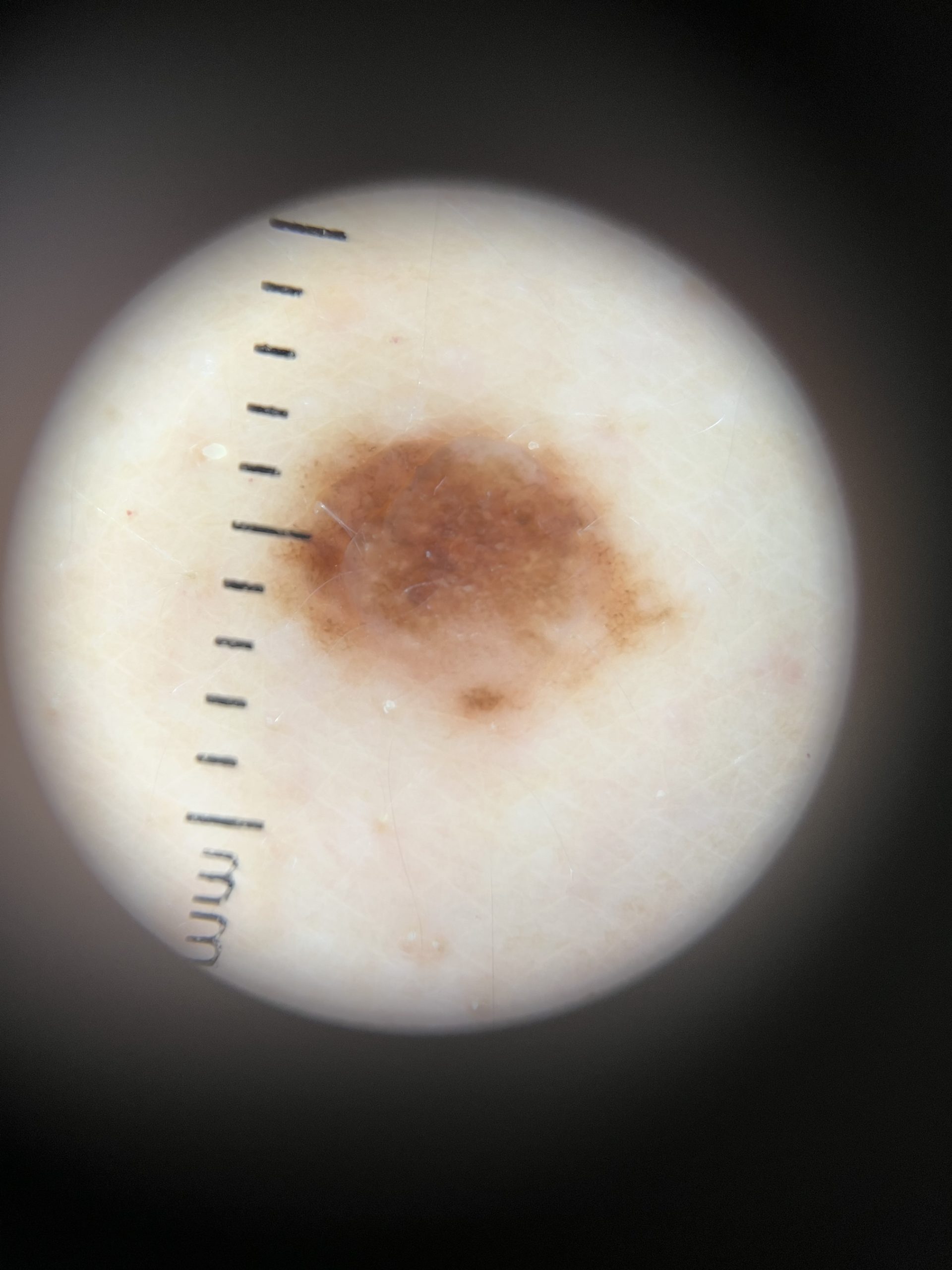
A few weeks ago, a 30-year-old woman came to see me. She’d been keeping an eye on a mole for a while and, like so many of us do, had put off getting it looked at. When she finally came in and I examined it under my dermatoscope, I created a report ready to send away to dermatology, checking her history and details regarding the mole. she felt it had grown over the last year.
It Isn’t Always What You Expect
One of the most important things I want people to understand is that skin cancer doesn’t always appear as a dramatic change to an existing mole. Yes, we should absolutely monitor our moles, but we should also pay attention to anything on our skin that doesn’t feel right. That includes:
- New growths that weren’t there before, regardless of size or colour
- Persistent blemishes that haven’t resolved after several weeks
- Patches that are scaly, crusty, or rough to the touch
- Sores or lesions that appear to heal, then come back; this pattern of recurrence is a particular red flag
- Anything that bleeds, itches, or oozes without an obvious cause
The ABCDE Rule
When examining moles specifically, the ABCDE rule is a helpful guide to know:
- A – Asymmetry: One half doesn’t match the other
- B – Border: Edges that are irregular, ragged, or blurred
- C – Colour: Uneven colouring or multiple shades within a single mole
- D – Diameter: Larger than 6mm (roughly the size of a pencil eraser)
- E – Evolving: Any change in size, shape, colour, or any new symptom
That said, not every skin cancer fits neatly into this framework, which is exactly why a professional assessment using a dermatoscope is so valuable.
Early Detection Saves Lives
Skin cancer is one of the most treatable cancers when caught early. The earlier an abnormality is identified and referred, the better the outcome, and that’s true regardless of age. Skin cancer doesn’t discriminate, and waiting until something looks “serious enough” can cost precious time.
As part of my service, I use a professional dermatoscope to examine lesions in detail, allowing me to see structures beneath the skin’s surface that are invisible to the naked eye.
Please, Protect Your Skin
Alongside regular checks, daily sun protection is one of the simplest and most effective things you can do for your long-term skin health. Use SPF 30 as a minimum every single day, not just on holiday. Reapply regularly if you’re spending time outdoors, seek shade during peak UV hours, and protect your skin with clothing and hats wherever possible.
UV damage accumulates over a lifetime, and it is never too late, or too early, to start protecting yourself.
Get in touch today to book your mole and blemish check.
To book your consultation in either my Colchester or Chelmsford Clinic CLICK HERE