
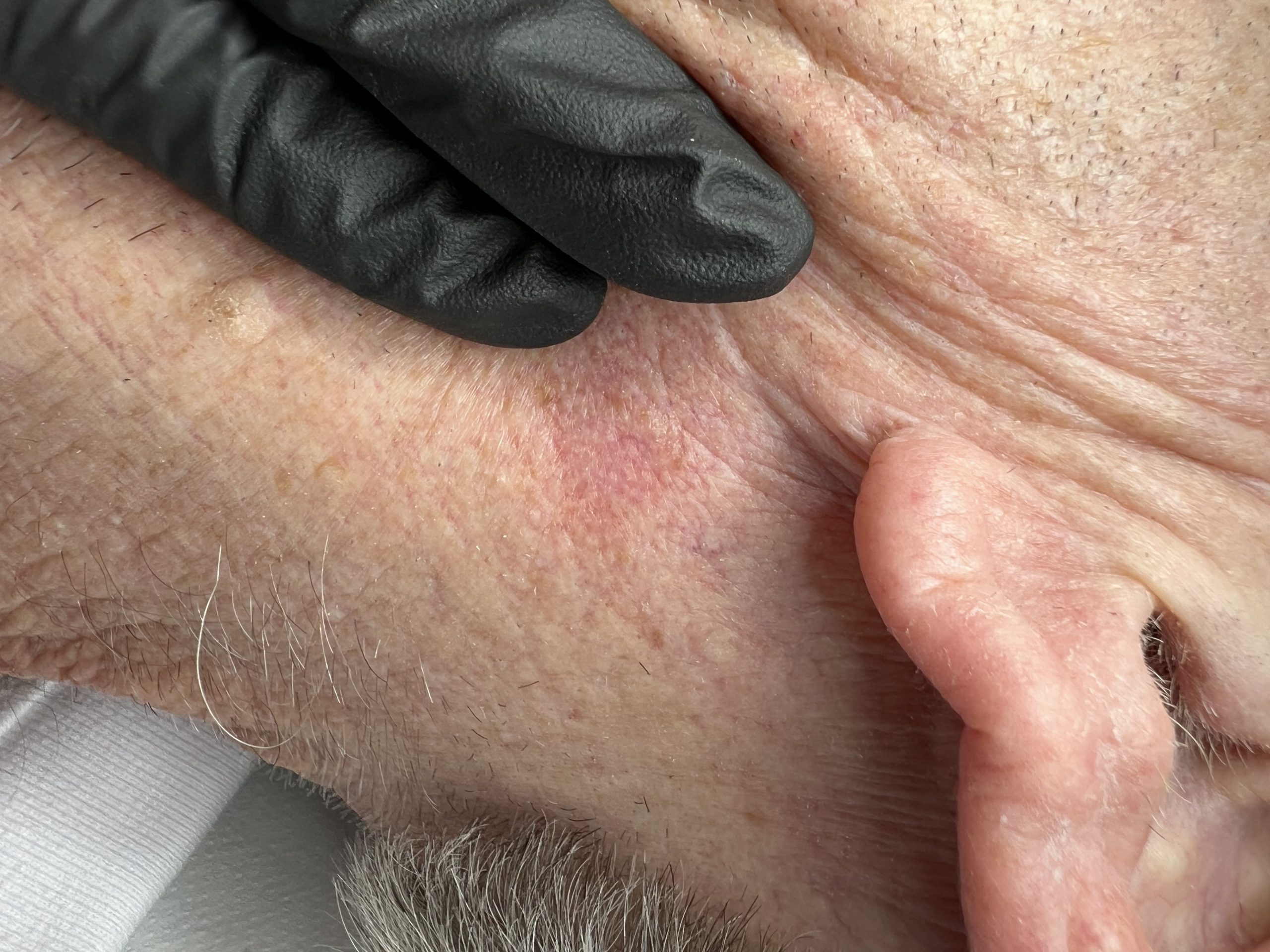
When advanced blemish removal is carried out properly, by a qualified practitioner, on suitable skin, with a thorough consultation and patch test first, scarring is rare. Not impossible, but rare, and this is something I will discuss with you in consultation about the possibility that there may always be a footprint of where the blemish once was. This is most likely with larger blemishes such as Seborrheic Keratosis.
What’s far more common, and often confused with scarring, is the normal healing process: redness, scabbing, and a slight pink mark that fades over weeks. That isn’t a scar. That’s your skin doing exactly what it’s supposed to do. Often, the skin can take months, sometimes longer, for pinkness to fade.
What actually causes scarring
Scarring tends to happen when one or more of these things go wrong:
The wrong treatment for the wrong blemish. Not every blemish suits diathermy. Some need a different approach entirely, or shouldn’t be treated cosmetically at all. This is why consultation matters so much.
Skin that wasn’t properly assessed. A patch test tells me how your skin responds and heals; without one, I would be guessing, which is something I, of course, do not do.
Aftercare was not followed. Picking at scabs, skipping SPF, and exposing healing skin to sun or sweat. These are the things that turn a normal healing into a mark that lingers.
The treatment was too aggressive. Going too deep, too hot, or trying to do too much in one session.
The Importance Of Aftercare
Your aftercare matters as much as my technique. I’ll give you clear instructions before and post treatment, both verbally and in writing. This will include keeping the area clean, not picking, using SPF, and avoiding swimming pools and saunas for the recommended time. Following these properly is the single biggest thing you can do to ensure a beautiful result.
Skin type matters too
Some skin types are more prone to pigmentation changes after any kind of treatment, not just blemish removal. We discuss this openly during your consultation, which is why a patch test is required. If your skin tends to mark easily, then we will need to discuss outcomes in depth and wait to see, maybe longer than usual, how you heal after the skin test.
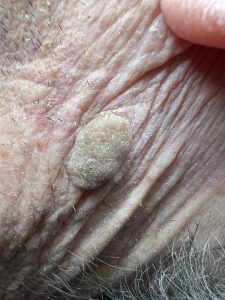
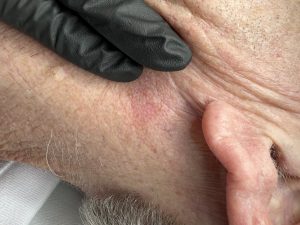
The picture below shows a Seborrheic Keratosis removal before and 6 weeks post-treatment on a gentleman aged approximately 70. Age is also a factor in healing, and you can see here that there is a small pink area. This result is extremely good given the size of the blemish, the client’s age, and the fact that this is 6 weeks post-treatment.
The honest reality
Could you have a tiny mark afterwards? Possibly, particularly with larger blemishes, as mentioned before, or those that require multiple sessions. But for most clients, the result is exactly what they were hoping for: skin that looks like the blemish was never there.
The risk of a small mark is one many of my clients happily accept, because the thing they’ve been self-conscious about for years is finally gone. I will give you all the information beforehand so you can make an informed decision about whether to proceed with treatment.
If a practitioner promises you zero risk of any mark ever, be cautious. If a practitioner refuses to discuss it at all, also be cautious. The right answer lies in the middle. Honest, informed, and tailored to your skin.
To book your consultation in either my Colchester or Chelmsford Clinic CLICK HERE