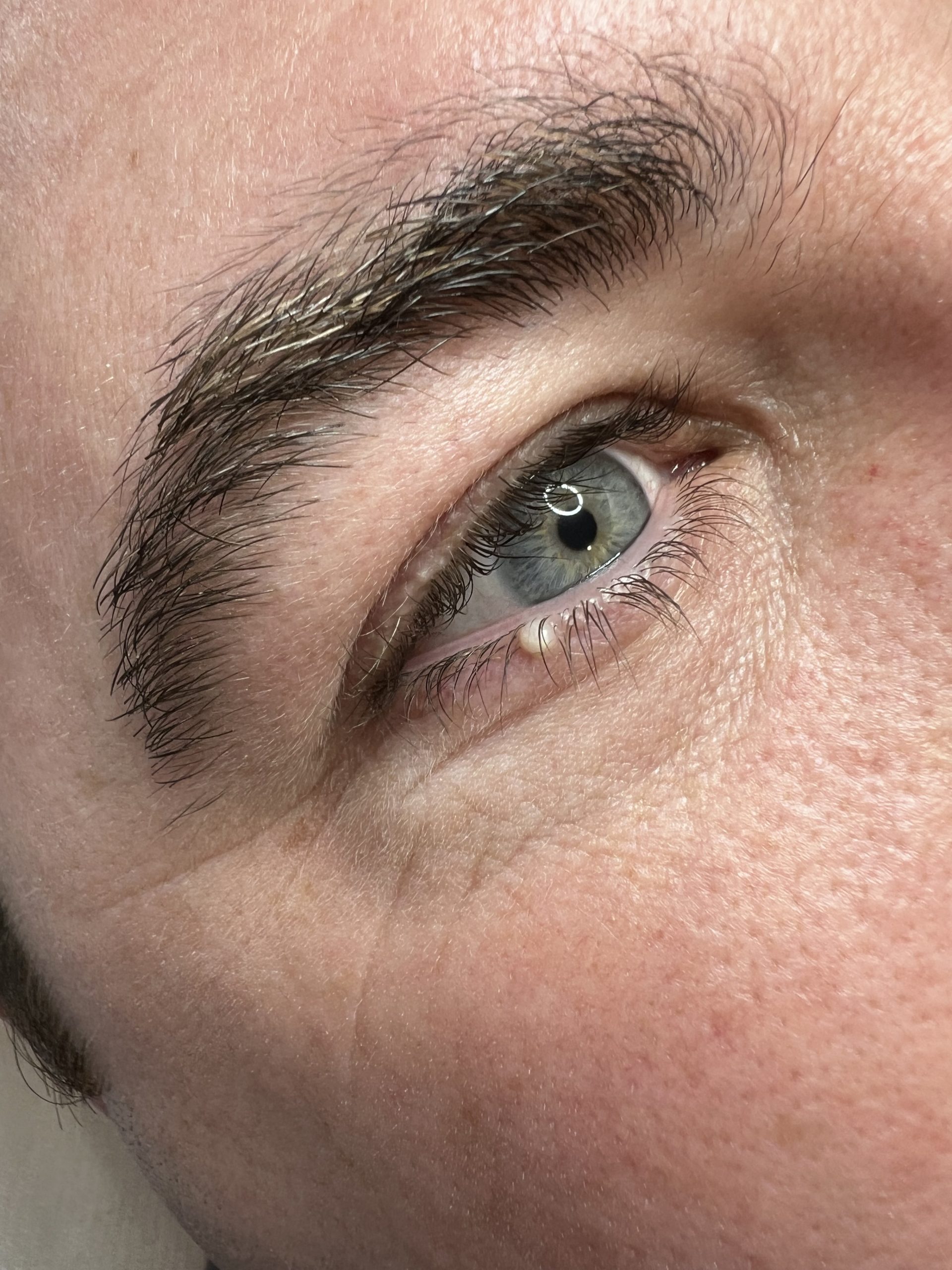
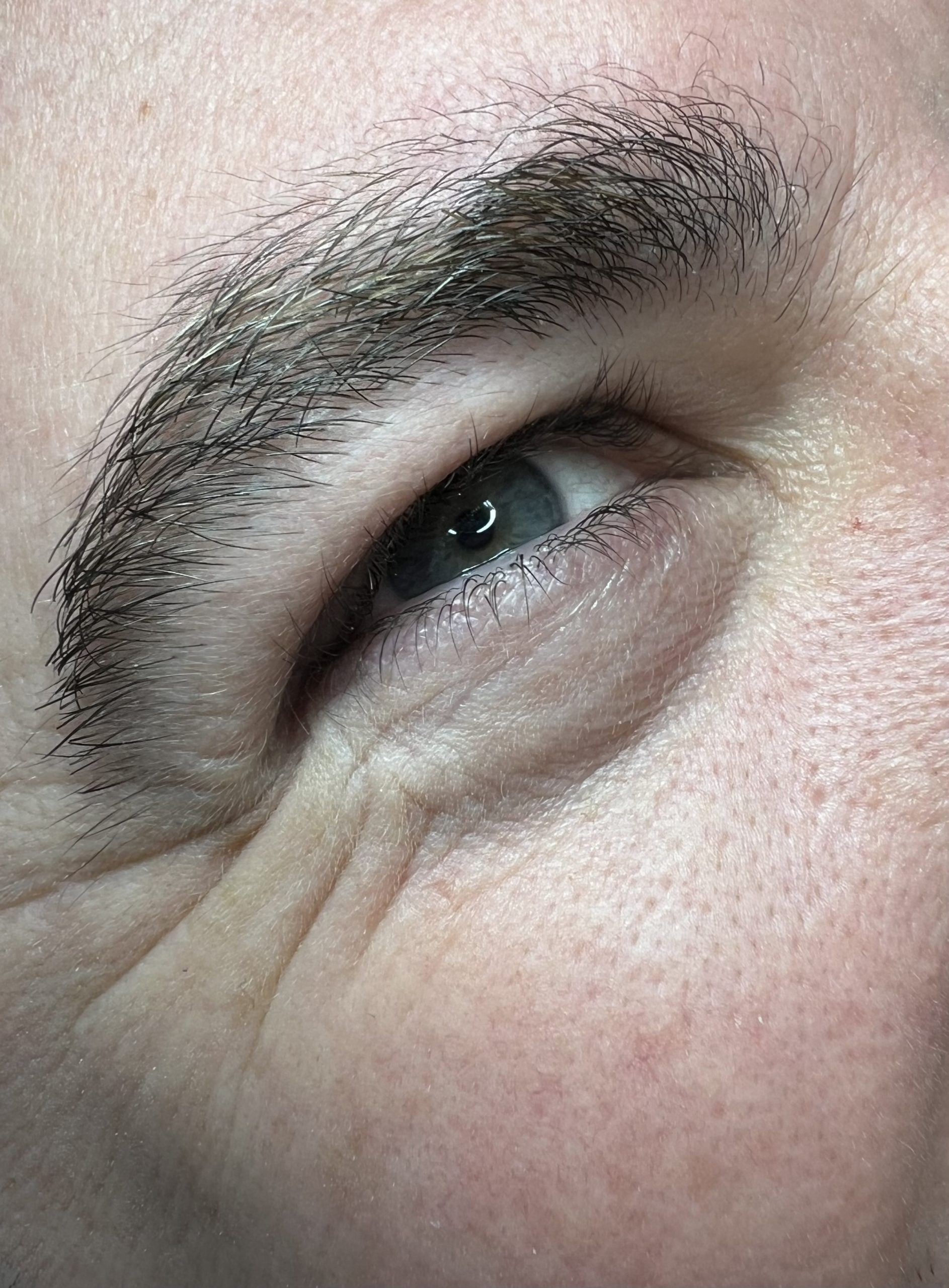
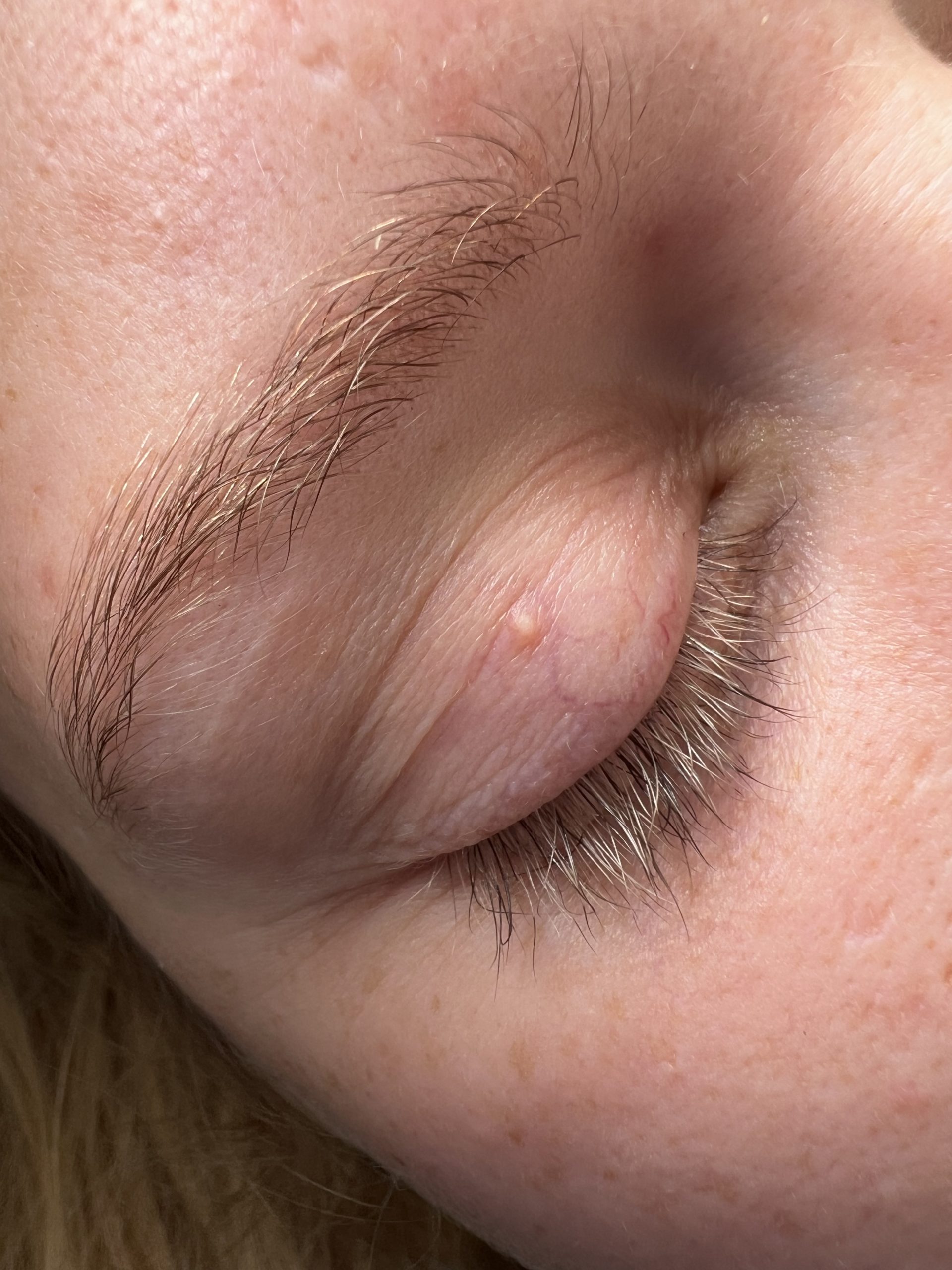
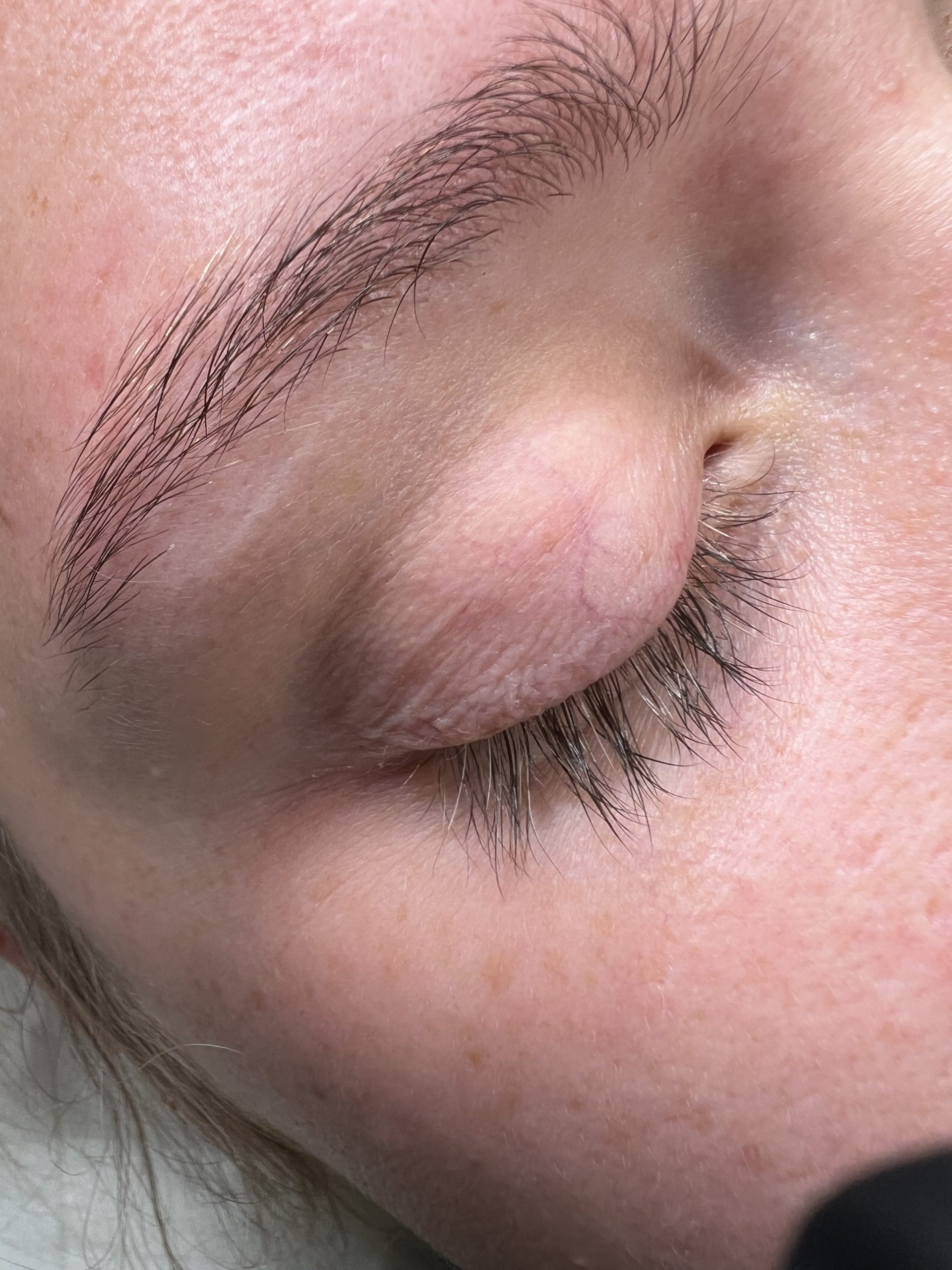
They might be small, but milia have a way of making themselves noticed, particularly when they cluster around the eyes or sit on a part of the face you look at every day. They’re not painful, they’re not harmful, but they can be stubbornly persistent, and for many people that’s reason enough to want them gone.
I’m Amy Gordon, and I focus solely on advanced blemish removal and skin rejuvenation. I treat milia, skin tags, warts, seborrhoeic keratoses, moles and a wide range of other blemishes from my private clinics in Colchester and Chelmsford. Milia removal is a treatment I carry out regularly, and I have extensive experience working in the delicate areas where they so often appear.
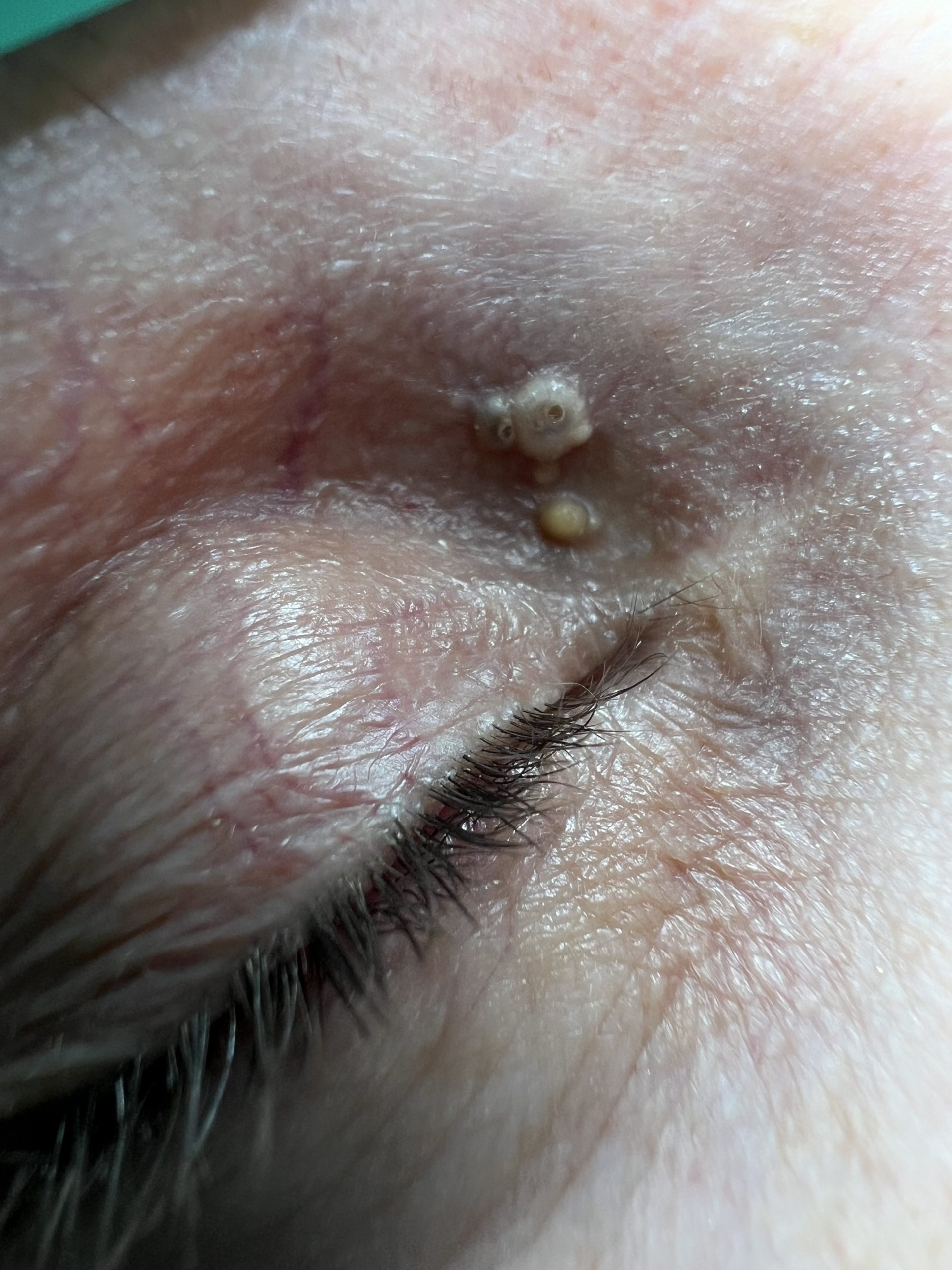
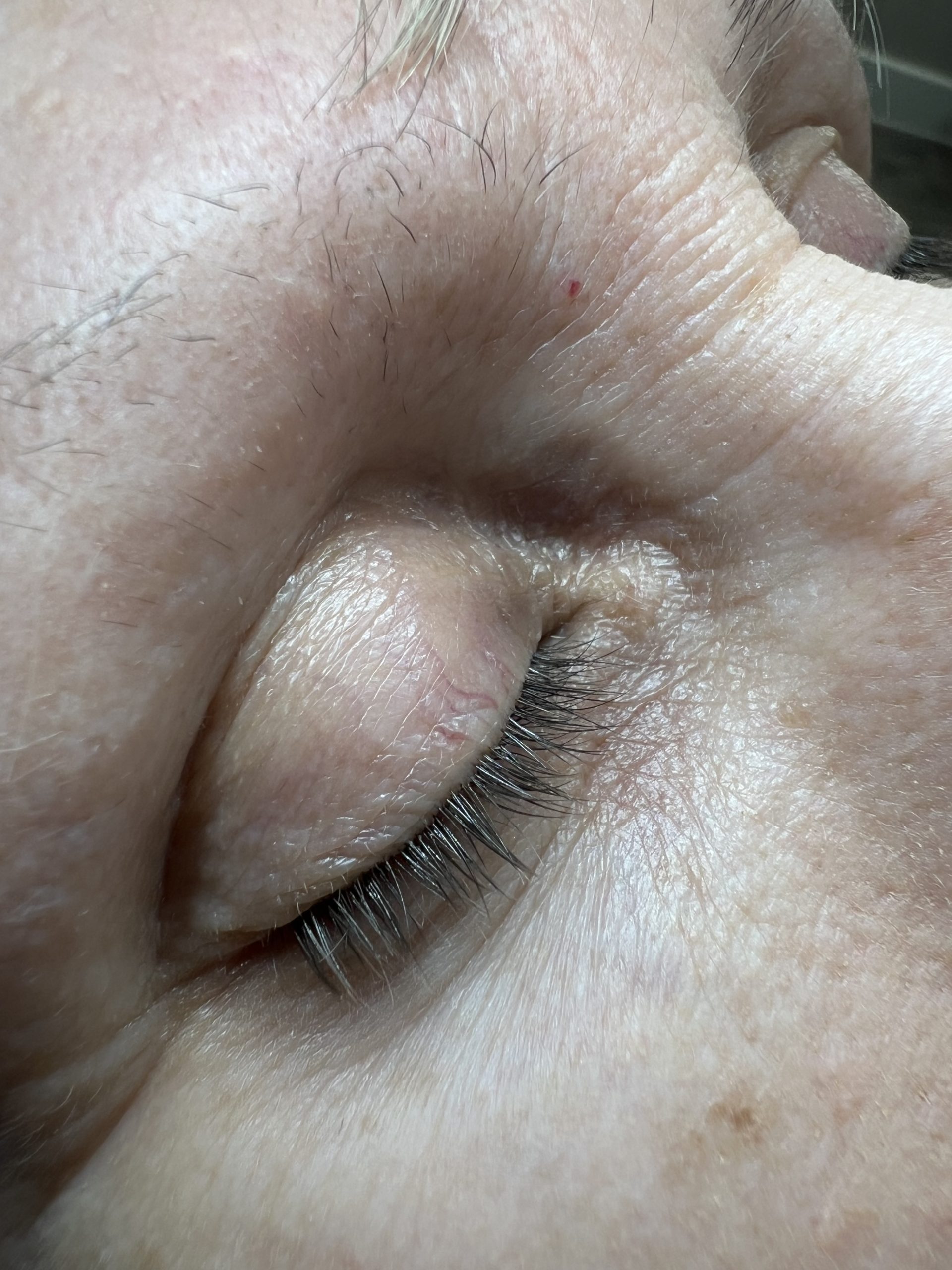
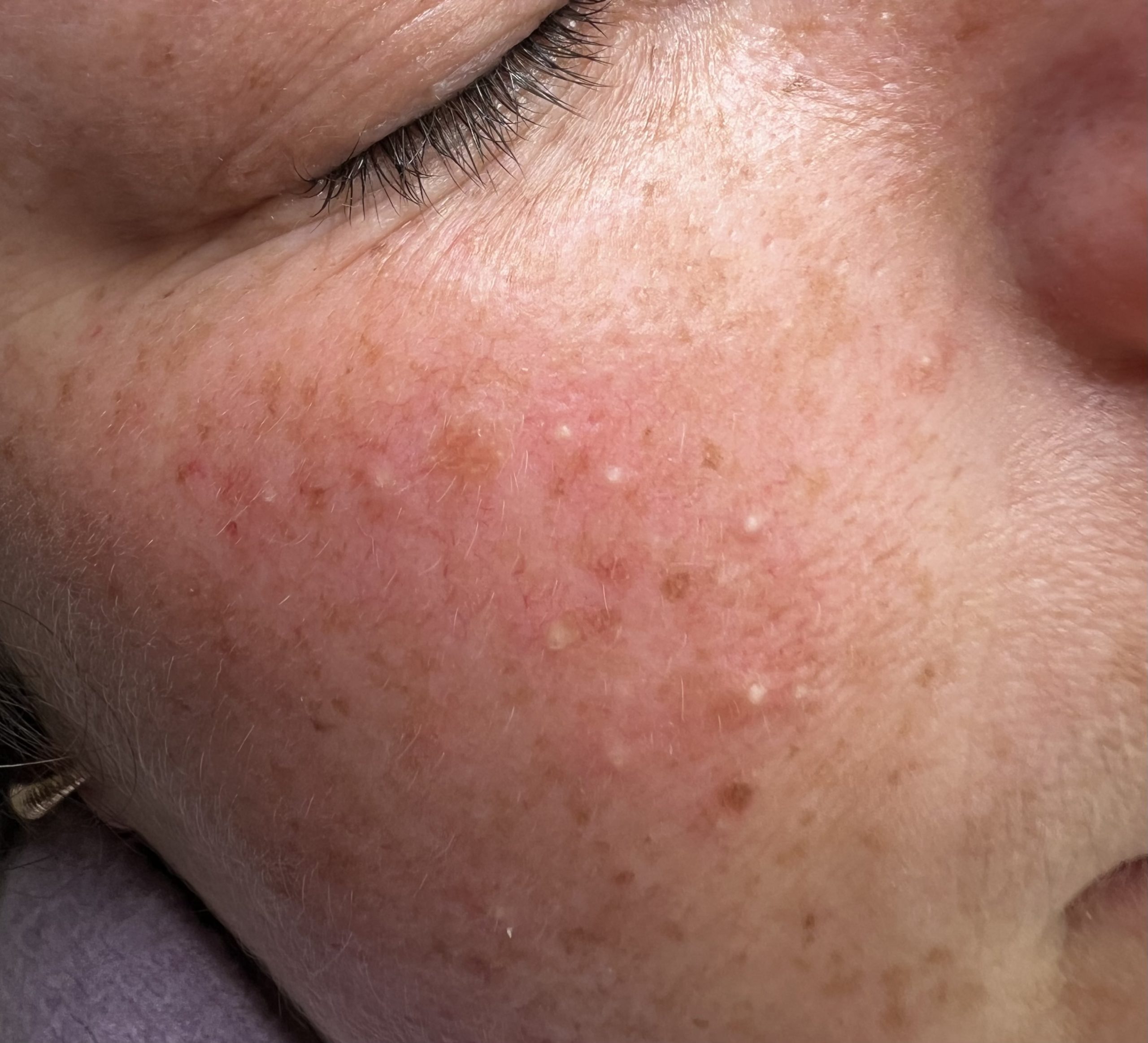
Milia are tiny, dome-shaped cysts that sit just beneath the surface of the skin. They appear as small white or yellowish spots and are most commonly found around the eyes, the cheeks, the nose and the forehead. They are firm to the touch and sit beneath the skin rather than on top of it, which is why they cannot be squeezed or extracted at home without risking damage to the surrounding skin.
They are keratin-filled cysts, formed when dead skin cells become trapped beneath the surface rather than shedding naturally. They can be persistent and will not always resolve on their own, particularly in adults.
Primary milia form spontaneously, without any known trigger. They are very common in newborns, where they typically clear without intervention, but they also appear frequently in adults and may persist indefinitely without treatment.
Secondary milia develop as a result of skin trauma or damage. They can occur following burns, blistering, abrasion or prolonged use of steroid creams. The skin’s natural healing process can sometimes trap keratin beneath the surface, leading to milia forming at or near the site of damage.
Milia en plaque is a less common form where clusters of milia appear on an inflamed or raised patch of skin. This type is often found around the eyelids and ears.
If you are not sure which type you have, or whether what you’re seeing is milia at all, you don’t need to work that out before coming in. I will assess any growth or blemish at your appointment and identify exactly what is present before treating anything.
Before any treatment, I thoroughly assess every blemish. A number of skin lesions can look similar to milia at first glance, and it is important to establish exactly what is present before any treatment is carried out.
I hold MASCED accreditation (Melanoma and Skin Cancer Early Detection), meaning I am specifically trained to assess skin lesions and identify anything that requires further investigation. Where a growth raises any clinical concern, I work alongside Map My Mole, headed by consultant dermatologist Dr Toby Nelson, to ensure the appropriate pathway is followed. Nothing is treated without a proper assessment first.
Your appointment begins with a thorough visual assessment before confirming that treatment is the right course of action.
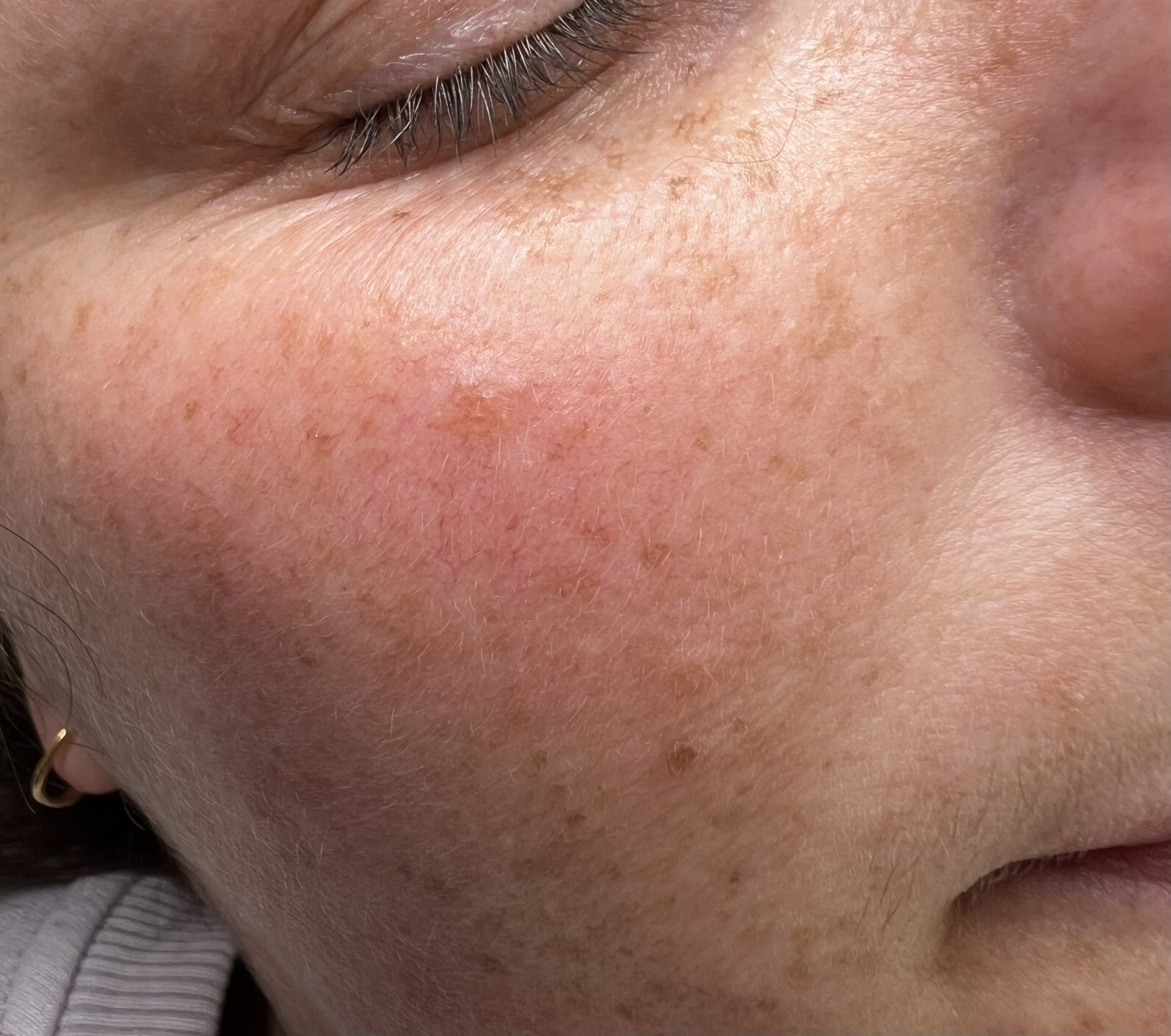
Milia are treated using advanced diathermy, a precise and controlled technique. The heat breaks down and dries out the trapped keratin pocket so the skin can clear or shed it. This quick, targeted treatment helps most clients see clear improvement after a single session.
Because milia so often cluster around the delicate skin near the eyes, precision is essential. I work carefully to protect the surrounding tissue while achieving the best possible result, and I will be honest with you at your assessment about what is realistic for your skin.
Following treatment, I will walk you through your aftercare before you leave. Most clients return to their normal routine the same day. Your six-to-eight-week follow-up appointment is included at no extra cost, so I can check that the skin has healed well and answer any questions.


 Trustindex verifies that the original source of the review is Google.
 Trustindex verifies that the original source of the review is Google.
 Trustindex verifies that the original source of the review is Google.
 Trustindex verifies that the original source of the review is Google.
 Trustindex verifies that the original source of the review is Google.
 Trustindex verifies that the original source of the review is Google.
 Trustindex verifies that the original source of the review is Google.
 Trustindex verifies that the original source of the review is Google.
 Trustindex verifies that the original source of the review is Google.
Over 25 years of experience in the aesthetics industry, with advanced blemish removal as my sole clinical focus, not a treatment added to a menu of other services.
MASCED accredited: trained in early detection of melanoma and skin cancer, meaning every growth is properly assessed before treatment.
Re-SkiL accredited with a Level 5 VTCT qualification: the highest level of professional recognition available in this field.
I work alongside consultant dermatologist Dr Toby Nelson, ensuring that any case needing specialist input has a clear, immediate referral pathway.
Your follow-up appointment at six to eight weeks is included in your treatment cost, with no hidden charges.
Two convenient clinic locations, Colchester and Chelmsford with flexible appointment times.
For full pricing information please visit my pricing page.
I believe in being transparent about cost before you commit. If you would like to discuss your specific case before booking, please do get in touch and I will be happy to talk it through with you.
Is milia removal permanent?
Once a milium has been treated, it will not return. However, if you are prone to developing milia, new ones may form over time. We can treat these at a future appointment.
Does it hurt?
Most clients describe a brief, sharp warmth during treatment. Milia are very small, so each one is treated quickly, and the process is generally very well tolerated. No anaesthetic is required.
How many can be treated in one session?
This depends on the number and location of the milia. In most cases, I can treat multiple milia in a single appointment. I will give you a clear indication of what is possible at your assessment.
Will I be left with a scar?
Diathermy is a very precise treatment, and the risk of scarring is low. A small mark forms at the treatment site and naturally fades over the following weeks. I will discuss the realistic outcome for your specific skin at your appointment.
Can milia be treated near the eyes?
Yes. Milia around the eyes are one of the most common presentations I treat. The precision of diathermy makes it well suited to this delicate area, and my clinical training means I am comfortable working safely where care and accuracy are essential.
I am not sure whether I have milia or something else. Should I still come in?
Absolutely. You do not need to know what you have before your appointment. I will assess any blemish properly and tell you exactly what it is before any treatment takes place.
How soon can I have treatment?
For single milia, I can assess and treat in the same appointment. If you have multiple, I will test a Milia prior to starting treatment to ensure healing is as expected. To find out the next available date at my Colchester or Chelmsford clinic, book online or get in touch directly.
Are there any reasons I might not be suitable for treatment?
There are some contraindications to diathermy treatment including pregnancy, certain medical conditions and active skin infections in the treatment area. I will discuss your full medical history at your consultation and let you know if there is anything that affects your suitability.
For more information on milia and how diathermy treatment works, you might find my blog post on stubborn white bumps and milia removal with diathermy a helpful read before your appointment.
If you have milia you would like assessed and treated, I would love to help. Appointments are available at my Colchester and Chelmsford clinics. Book online below, send me a WhatsApp, or call 07399 465768. I am always happy to have a quick chat before you commit to anything.