
Which Is Better for Blemish Removal?
When you’re researching blemish removal, you’ll come across two treatments that keep appearing: cryotherapy and advanced electrolysis (also known as diathermy and electrocautery). Both are widely offered; both work, but they’re genuinely different. After offering cryotherapy in my clinic for several years, I made the deliberate decision to stop using it and focus solely on advanced electrolysis. I want to explain why, and what it means for you as someone trying to choose the right treatment.
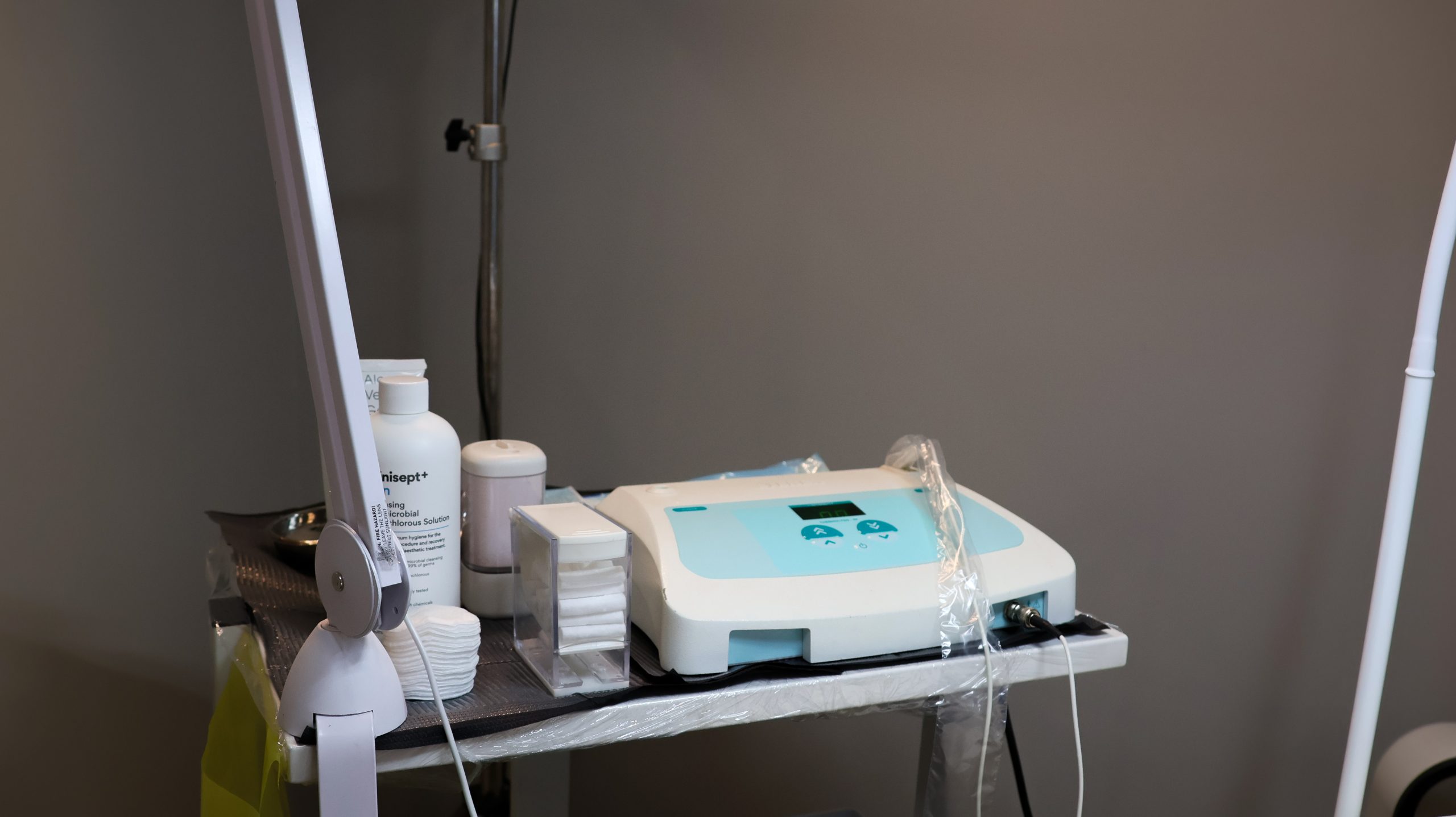
Cryotherapy works by freezing the blemish, usually using nitrous oxide via a CryoPen or, in some clinical settings, liquid nitrogen. The extreme cold destroys the cells, and over the following days the treated area scabs and falls away. It’s quick, often just a few seconds per lesion, and it’s widely used across clinics and even in some pharmacies. Advanced electrolysis, on the other hand, uses a very fine probe to deliver a precise, controlled current directly into the blemish itself. The heat cauterises or dries out the tissue, and the area heals over the following days. Also quick, but the practitioner has far more control over exactly what’s being treated and how deeply the treatment goes.
The biggest difference between the two, in my experience, is precision. Cryotherapy affects an area; it’s harder to target one specific blemish without also touching the healthy skin around it. Diathermy is millimetre-precise. For blemishes near the eyes, on the eyelids, or clustered close together, that precision matters enormously. I can also adjust the depth of treatment based on exactly what I’m working with, which matters for shallow blemishes like milia and layered ones like xanthelasma. Cryotherapy is more of a blanket freeze.
There’s also a broader range of blemishes that diathermy handles confidently. Both treat skin tags, warts and some seborrhoeic keratoses well, but diathermy gives me the flexibility to also treat milia, xanthelasma, thread veins, sebaceous hyperplasia, cherry angiomas and blood spots to a really high standard. Cryotherapy is more limited in what it can do properly. And in terms of aftercare and healing, cryotherapy carries a slightly higher risk of pigment loss in the treated area, particularly in deeper skin tones, a small pale patch that can occasionally appear afterwards. Diathermy tends to heal more predictably and, in my experience, more cosmetically consistently, particularly on the face.
So why did I stop offering cryotherapy? I offered both for a period mainly so clients would have the choice and there are some contraindications such as a pacemaker which can mean I cannot use diathermy. Over time, it became clear that for the blemishes I was treating most often, and for the standard of finish I wanted for my clients, advanced electrolysis simply gave better results. More precise, more versatile, more consistent healing, less risk of pigment change. It wasn’t a comment on cryotherapy as a treatment; it absolutely has its place, particularly in medical dermatology settings and for certain lesion types. But for the advanced blemish removal work I specialise in, diathermy was the clear choice. I’d rather do one thing exceptionally well than two things adequately, and that’s the decision I made.
Which should you choose? Honestly, it depends on the practitioner as much as the method. A skilled cryotherapy practitioner will get better results than an unskilled diathermy one, and vice versa. When you’re comparing clinics, ask what qualifications the practitioner holds, how long they’ve been treating your specific condition, whether there’ll be a proper consultation and patch test first, and what their protocol is for moles or anything that might be more serious. If a clinic can’t answer those things clearly, that tells you something important.
For most of the blemishes I treat, advanced electrolysis is, in my professional opinion, the more precise and versatile option. It’s why I chose it, and it’s why I’ve stayed with it. If you’re weighing things up and want a straight answer, come in for a consultation. I’ll tell you honestly what I’d recommend, and if I think a different treatment or a different practitioner would suit you better, I’ll say so.
To book your consultation in either my Colchester, Chelmsford or Clapham Clinic CLICK HERE