
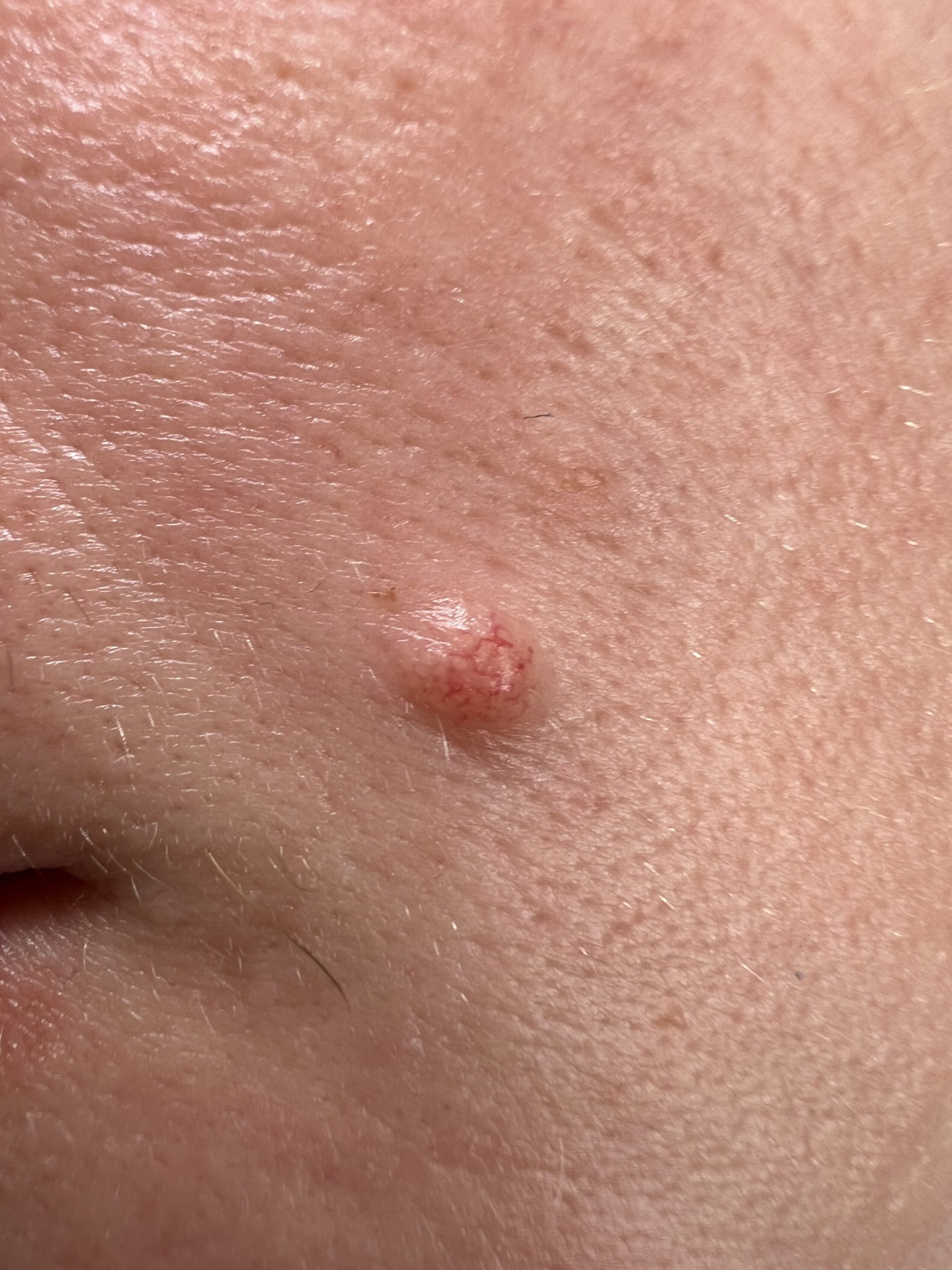
Mole Reduction vs Mole Removal: What Is the Difference and What Does Each One Actually Mean?
This is genuinely an important question. When someone comes to me wanting to do something about a mole, the first thing I need to establish is what they actually want to achieve, because mole reduction and mole removal are two very different things, medically and practically.
Here is what each one means, how they differ, and why the distinction matters more than most people realise.
What is mole removal?
True mole removal means the complete excision of a mole, including the tissue beneath the skin surface. This is a surgical procedure, carried out by a doctor or dermatologist, and it involves cutting the mole out and closing the wound with stitches. The removed tissue is then sent to a laboratory to be examined under a microscope.
That last part is important. When a mole is surgically removed, histology (the laboratory analysis of the tissue) is standard practice. This confirms what the mole actually was at a cellular level and rules out anything that needs further attention. Surgical mole removal leaves a scar because cutting into the skin and stitching it closed always does, though the size and visibility of that scar depends on the mole’s size and where it sits on the body.
Surgical mole removal is carried out on the NHS when there is a clinical concern about a mole, and privately when someone wants a mole removed completely regardless of whether there is any clinical concern.
What is mole reduction?
Mole reduction is a different treatment entirely. Rather than cutting the mole out, it uses techniques such as advanced diathermy to reduce its appearance. Diathermy applies a precise, controlled electrical current to the mole tissue, which reduces its raised profile and, in many cases, can lighten its colour and reduce its overall visibility.
The mole is not removed completely. The surface tissue is treated, the raised profile is flattened, and the result in many cases is a mole that is dramatically less noticeable. For raised moles in particular, this can make a very significant difference to how the mole looks and feels.
Because the tissue is not excised and sent for analysis, mole reduction is only suitable for moles that have already been properly assessed and confirmed as benign. This is not a step that can be skipped.
Why does the assessment matter so much?
With any mole treatment, the assessment that takes place before anything is done is the most important part of the process. A mole that has been stable for many years is clinically very different from one that has recently appeared or begun to change in size, shape or colour.
Before I carry out mole reduction at my clinics in Colchester and Chelmsford, a GP must have checked the mole and confirmed it as benign. Where there is any uncertainty, or where a client would like additional reassurance, I work in partnership with consultant dermatologist Dr Toby Nelson at Map My Mole. I prepare a full clinical report with imagery and send it directly to them for assessment before any treatment.
If a mole raises any concern at assessment, it will not be treated. It will be referred. The distinction between a mole that is safe to reduce and one that needs surgical removal and histology is not always obvious to the untrained eye, which is why this step is non-negotiable.
Which one is right for me?
The answer depends on what you are hoping to achieve and what your mole looks like on assessment.
If you have a raised mole that has been checked, confirmed as benign and is simply somewhere you wish it was not, or something you have been self-conscious about for years, mole reduction using diathermy is likely to be the most appropriate route. It is less invasive than surgery, does not require stitches, and in the right cases can produce a very significant improvement in appearance.
If you have a mole that has changed, or that has not been assessed, or if you want it completely and permanently gone with laboratory confirmation of what it was, then surgical removal by a doctor or dermatologist is the right path, and I will tell you so clearly.
I will never carry out a treatment that is not right for the person in front of me. If you come to me hoping for reduction and the assessment tells me something different needs to happen first, I will explain why and make sure you know exactly what your next step should be.
What can I realistically expect from mole reduction?
Results vary depending on the type, size and depth of the mole. Raised moles generally respond very well to diathermy. Flat moles or heavily pigmented moles may respond differently, and I will always give you an honest picture of what is achievable for your specific mole before any treatment begins.
Some moles respond fully in a single session. Others benefit from more than one treatment. What I can tell you is that I will not promise a result I cannot deliver, and I will not carry out treatment I do not believe is in your best interest.
For more information on mole reduction at my Colchester and Chelmsford clinics, or to find out about pricing, please visit my pricing page. If you would like to have a mole assessed, book online or get in touch directly. I am always happy to have a chat before you commit to anything.