
What to Expect, What It Costs, and Why It’s Worth Doing Properly
If you’ve found this page, chances are you’ve noticed a small piece of skin somewhere on your body, and you’re trying to work out what to do about it. You’re not alone. Skin tags are among the most common things I see in clinic, and among the things people search for most before they book a consultation. Here’s everything you need to know, from what they actually are through to what happens on the day.
What Are Skin Tags?
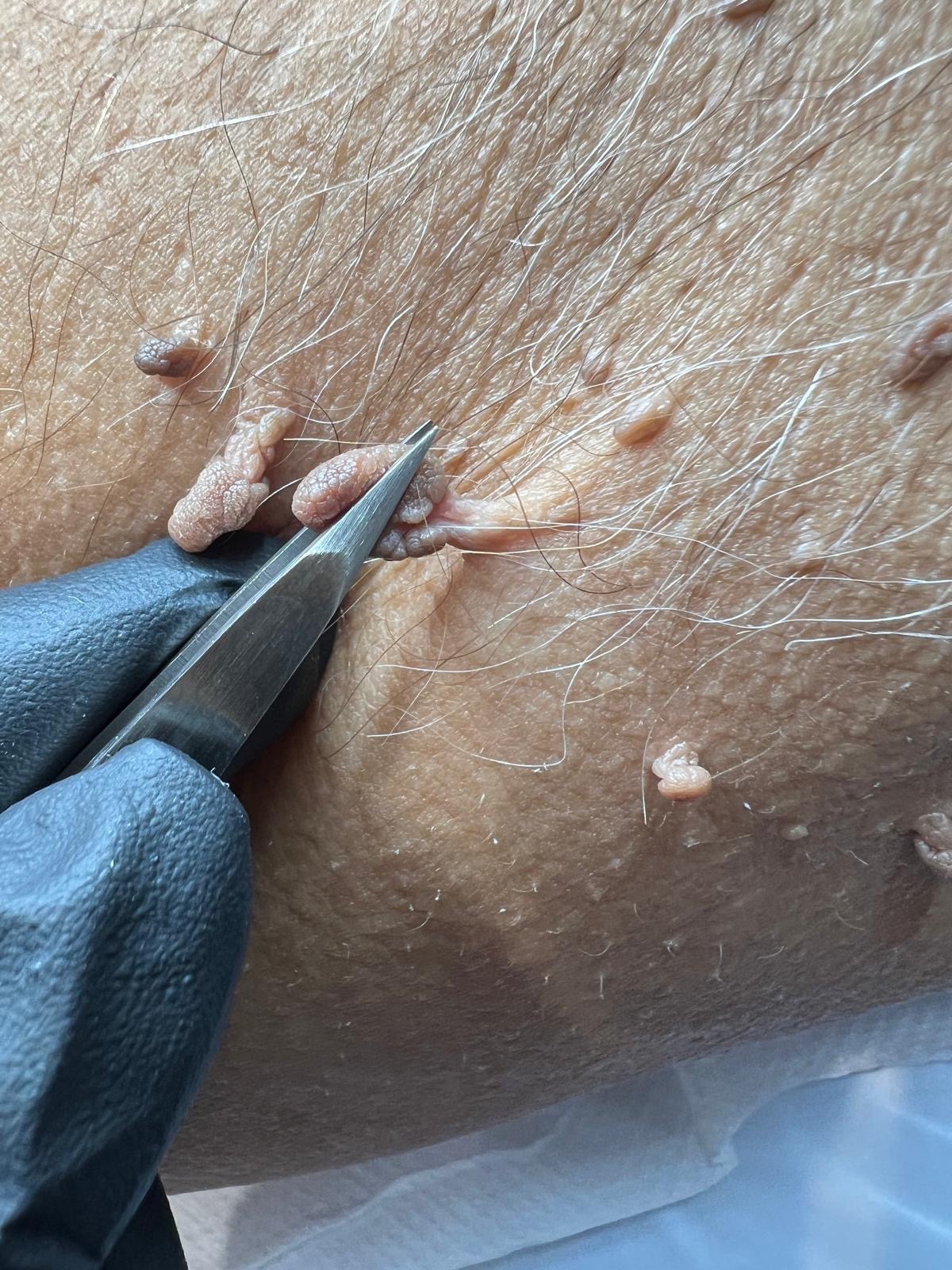
Skin tags are small, soft growths of skin that usually hang off the surface by a thin stalk. They’re typically skin-coloured or slightly darker, painless, and harmless. You’ll most often find them where skin rubs against skin or clothing: the neck, underarms, eyelids, and sometimes the groin area.
They’re extremely common. Most adults will develop at least one at some point, and they tend to become more frequent with age, during pregnancy and with weight gain.
Why Do Skin Tags Appear?
There’s no single cause, but a few things make them more likely:
- Friction – repeated skin-on-skin or skin-on-clothing rubbing is the biggest factor, which is why they cluster around the neck, underarms, and bra line.
- Hormonal changes – pregnancy in particular can trigger new skin tags.
- Genetics – if a parent has them, you’re more likely to develop them too.
- Insulin resistance – there’s a recognised link between skin tags and conditions like type 2 diabetes, though having skin tags doesn’t mean you have an underlying condition.
None of this means you need to do anything about them. Plenty of people simply live with skin tags their whole lives. But if one is catching on jewellery, snagging on clothing, getting nicked while shaving, or simply bothering you when you look in the mirror, that’s a perfectly good reason to have it removed.
Skin Tag Removal Cost in the UK: What Affects the Price
This is one of the most searched questions on the topic, and the honest answer is: it depends. A few things influence what you’ll pay:
- How many you’re having removed – most clinics, mine included, price per treatment session rather than strictly per tag, since several small tags can often be treated in one sitting. If you have a single, larger tag, it is generally priced individually.
- Size and location – a tiny tag on the neck is a different job to a larger one in a more delicate area like the eyelid
- The method used – advanced techniques (like the one I use) tend to sit at a different price point to high-street “quick fix” options, and for good reason, which brings me to the next point.
Why the Method Matters More Than the Price Tag
This is genuinely the bit I’d want you to read even if you skip everything else. Not all skin tag removals are equal, and the cheapest option isn’t always the safest.
Freezing kits you can buy online, or having something “just snipped off” without proper training, can lead to poor healing, infection, or scarring, particularly on sensitive areas like the eyelids or neck. I trained specifically in advanced blemish removal techniques, and I work alongside a consultant dermatologist, precisely because getting the diagnosis and technique right matters more than getting it done as cheaply or quickly as possible.
It’s also worth noting that a skin tag can occasionally be mistaken for something else that genuinely needs a dermatologist’s opinion first. That’s exactly why a proper consultation, not just a quick removal, is the safer starting point.
Is Skin Tag Removal Painful?
Most clients describe it as a brief, mild hot sting, it’s typically over in seconds per tag. I’ll always talk you through exactly what to expect before we start, so there are no surprises.
What Happens During an Appointment
- Consultation – I take a proper look, confirm what we’re dealing with, and talk through the treatment plan with you
- Treatment – the tag is treated using diathermy, also known as electrocautery, suited to its size and location
- Aftercare advice – you’ll leave with clear guidance on what to expect over the following days
Most people are back to normal activities straight away, with no significant downtime.
Aftercare: What to Expect Afterwards
The treated area may appear slightly pink or red immediately after treatment while it heals; this is completely normal. I’ll give you specific aftercare advice on the day based on the location and size of what’s been treated, but in general, keeping the area clean and avoiding picking at it while it heals is the main thing to know. I always ask to see you between 6-8 weeks post treatment which is included so I can check your healing and ensure you are happy with the treatment.
Booking Your Consultation
I run advanced blemish removal clinics in Colchester & Chelmsford, and I always see you for a full consultation before any treatment plan. This is something I pride myself on, and I think it is absolutely key to safe and effective treatment. If you’ve got a skin tag, or several, that you’d like looked at, book in and we’ll take it from there.
To book your consultation in either my Colchester or Chelmsford Clinic CLICK HERE