
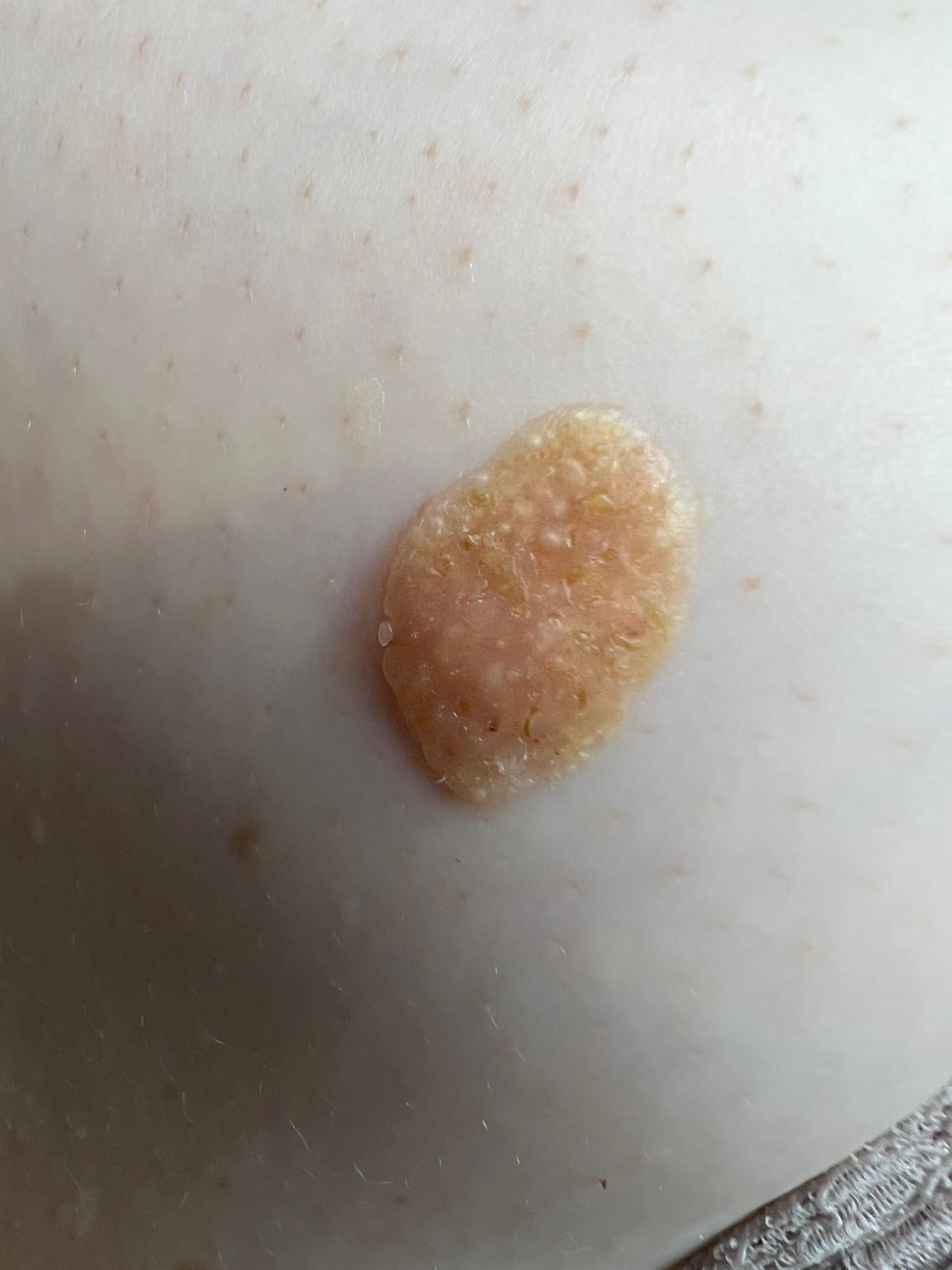
One of the most common things I hear in consultations is some version of “I didn’t know what to call it.” Someone recently described a seborrheic keratosis to me as looking like “a crusty mole,” which is a completely reasonable way to describe it if you don’t know the medical term. Most people don’t walk around knowing the names of skin conditions, and there’s no reason you should; that’s exactly what I’m here for.
But if you’re trying to work out what’s on your skin before booking a consultation, it helps to know roughly what you’re looking at, so here’s a plain-language guide based on appearance rather than medical terminology.
“It’s a small or large flap of skin hanging off”
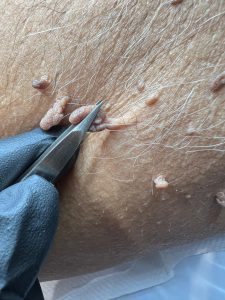
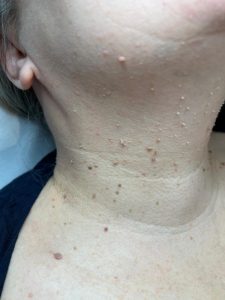
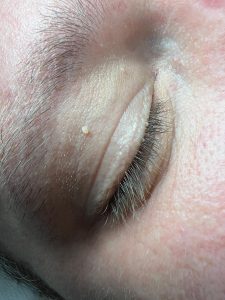
This is almost always a skin tag. They’re soft, usually skin-coloured or slightly darker, and often appear where skin rubs against skin or clothing, like the neck, underarms, or eyelids.
Skin Tags – Underarm. Skin Tags on the neck Small Skin Tag – Eye area
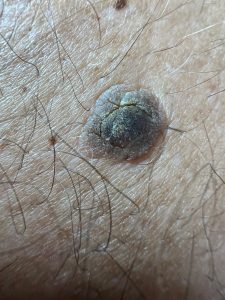
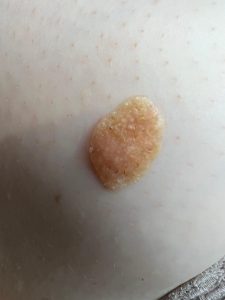
“It’s crusty, scaly, and looks a bit like it’s stuck on”
This is often a seborrheic keratosis, even though, as my client put it, it can genuinely look like a crusty mole from the outside. They tend to have a waxy or crusty, “stuck-on” texture rather than being soft and flappy, and they’re extremely common, particularly as we get older.
Crusty Seborrheic Keratosis
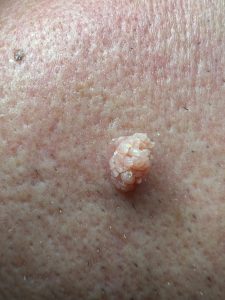
“It’s rough and has a bumpy, uneven surface”
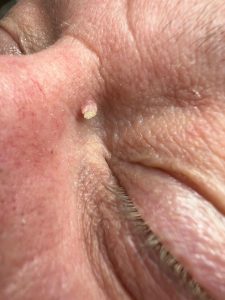
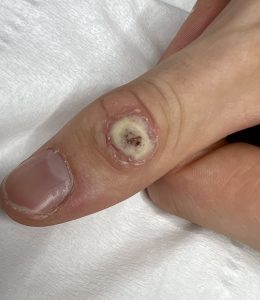
This is more typical of a wart. Warts often have a slightly rough, cauliflower-like texture (for filiform warts) and can appear anywhere, though hands and feet are common spots. Filiform warts (one of my favourites to treat) generally appear on the face and neck and are often mistaken for skin tags.
Filiform Wart – Side of Nose Wart – Thumb Filiform Wart – Cheek
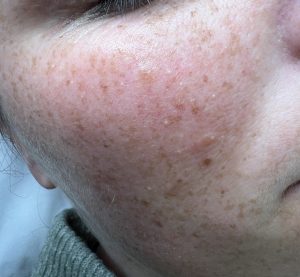
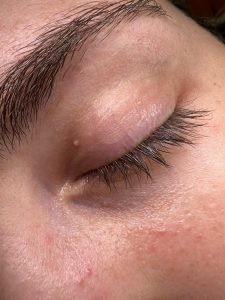
“It’s a tiny white or yellow bump, like a little pearl under the skin”
This describes milia almost exactly: tiny, trapped bumps that most commonly appear around the eyes and cheeks.
Multiple Milia – cheek Milia – Eyelid
Why the name matters less than you’d think
Here’s the honest truth: you don’t need to know what to call it before you come in. What matters far more is getting it properly looked at by someone who can tell the difference confidently, since some of these conditions can look deceptively similar to each other, and occasionally to similar blemishes that need a dermatologist’s opinion first, which is exactly why I always err on the side of caution and refer out when something doesn’t look entirely straightforward.
If you’ve got something on your skin you can’t quite explain, don’t worry about finding the right word for it.
To book your consultation in either my Colchester, Chelmsford or Clapham Clinic CLICK HERE