
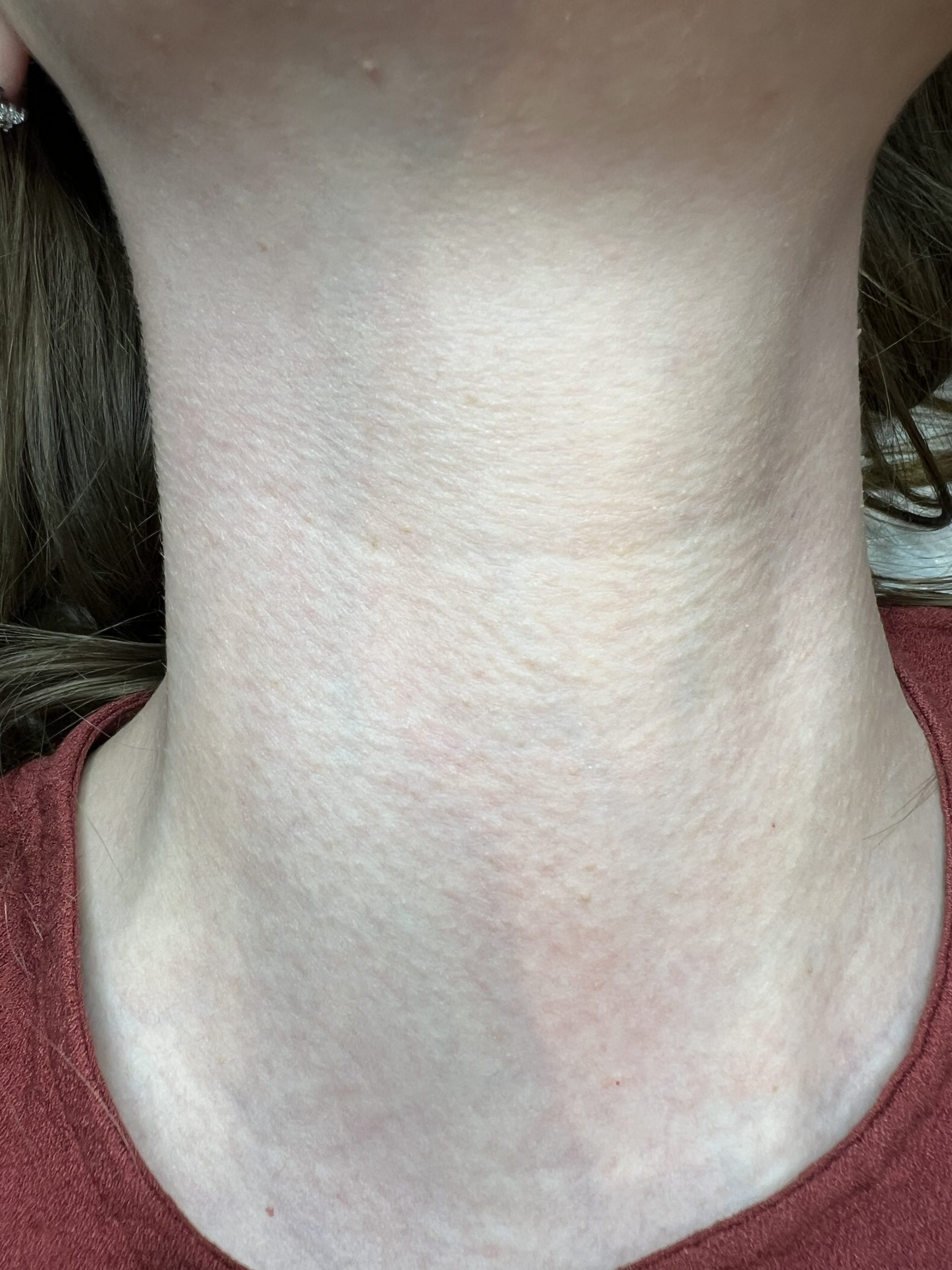
How effective is diathermy for skin tag removal? Is it straightforward? Is it a one-off process? This client’s experience is a good example of what proper, considered treatment actually looks like in practice, rather than a quick fix.
Before any treatment began, we carried out a patch test to check how her skin would respond. This isn’t a step to rush past, since everyone’s skin reacts slightly differently, and it lets me see healing patterns before committing to full treatment. A few days later, once I could see the area was healing exactly as it should, we went ahead.
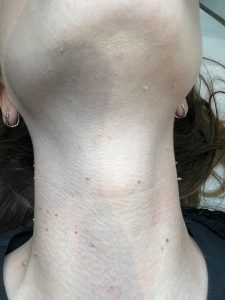
Rather than treating everything in one sitting, we spread her treatment across two sessions roughly two weeks apart. This wasn’t necessary because anything went wrong; it’s a deliberate choice to protect skin health, giving each treated area proper time to heal fully before asking it to recover from anything further. Trying to do too much in one go can put unnecessary strain on the skin, and a slower, staged approach almost always yields better long-term results. What you can’t see in the image is lots of tiny little tags starting to appear, which I also treated.
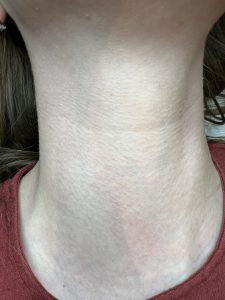
Six weeks after her second session, she came in for a final follow-up review, which I include for every client, so I could check that the skin had settled and healed properly with nothing left to address.
Before Skin Tag Removal After Skin Tag Removal
She was kind enough to leave a review afterwards, which speaks for itself:

If you’re considering skin tag removal and want a treatment plan that prioritises your skin’s health over rushing results, book a consultation at my Colchester, Chelmsford or Clapham clinic to talk through what’s right for you.
To book your consultation in either my Colchester, Chelmsford or Clapham Clinic CLICK HERE